Diamonds - Nature's masterpiece and man's eternal quest
Diamond, one of the hardest natural substances on earth, has been revered and loved by people since ancient times. With its unique optical properties, hardness and rarity, diamond has a wide range of applications in various fields. This article will discuss the formation, properties, and applications of diamonds and the pursuit of diamonds by mankind.
Diamond is a crystalline mineral composed of the element carbon, and the process of its formation requires extremely high temperatures and pressures. Such extreme conditions are usually found only deep within the Earth's crust, such as the high-pressure environment in the mantle. In such environments, carbon atoms form a diamond lattice structure through covalent bonding. As the Earth's crust moves, diamonds are brought to the surface through geological activity such as volcanic eruptions, creating the diamond deposits as they are known.
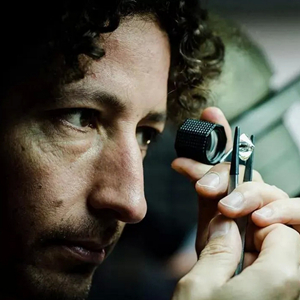
Diamonds have many unique properties that make them an extremely valuable material. First, diamonds are the hardest known natural substance, with a Mohs hardness of 10. This makes them extremely wear-resistant and machinable. Second, the optical properties of diamonds are very superior. The extremely high refractive index of diamond gives it excellent optical properties such as refraction, reflection and dispersion. Finally, the thermal conductivity of diamonds is also outstanding. Its thermal conductivity is as high as 2000-2500 W/m-K, far more than any other known substance, making it unique in the field of thermal conductivity.
The hardness, optical properties and thermal conductivity of diamonds allow for a wide range of applications in various fields. In the jewelry field, diamonds are widely used in jewelry making as precious ornaments due to their beautiful optical properties. In industry, the hardness of diamonds makes them ideal for cutting, grinding and drilling tools. In addition, the thermal conductivity of diamonds has a wide range of applications in the electronics field, such as making high-performance heat sink parts.
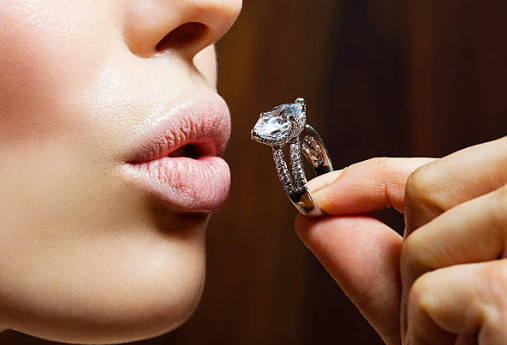
Since ancient times, mankind's quest for diamonds has never ceased. The rarity, beauty and value of diamonds have made them a timeless symbol of love and luxury. In various cultures, diamonds are considered a precious gift to pay tribute to love, friendship and loyalty.
Lab diamond Technology is evolving
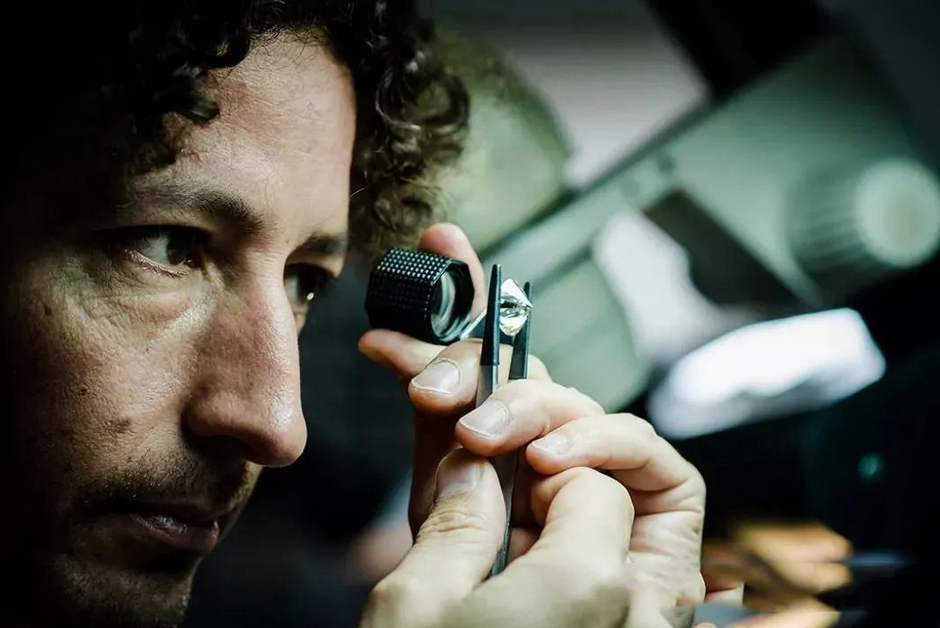
With the development of technology, CVD diamond are gradually coming into the limelight. Compared to natural diamonds, lab grown diamond have more controllable color, clarity and cut, and are less expensive.
Lab diamond Proposal Season
It's proposal season and engagement rates are on the rise. So are sales of factory-made diamonds. Not that you will know the difference. A lab diamond looks the same as a natural diamond. The only noticeable difference is the price tag.
The results are truly astounding, with March figures showing a 63 percent increase in the number of engagement rings with lab grown diamond sold compared to last year, while the number of engagement rings with natural diamonds sold fell 25 percent over the same period.
Lab diamond tide is turning
Why are consumers flocking to buy synthetic diamonds? Cost is the most obvious reason.
The average retail price for the most popular engagement ring in March was $2,318. This is 73% cheaper than a natural diamond of the same size, cut and clarity as a lab diamond, which costs $8,740, plus the lower cost allows newlyweds to purchase a larger stone.
A lab diamond is a real diamond, but it can take weeks to make, natural diamonds are formed over a period of 800 million to 3 billion years, and their supply is not unlimited.
Lab diamond Supply is not unlimited.
This makes natural diamonds more expensive, and prices are likely to rise as Russia invades Ukraine to tighten the supply chain for rough natural diamonds. The sanctions directly target Alrosa, a company partially owned by the Russian government, which the U.S. government identifies as the world's largest diamond mining company, accounting for 28 percent of global diamond production.
Third-generation diamond experts and Los Angeles-based fine jewelers say that lab grown diamond are also growing in popularity because consumers are becoming more aware and educated about them. Buy a lab grown diamond is usually under the age of 40 and is very budget savvy.
Among the younger generation, ecological awareness and ethical concerns about sourcing natural diamonds is another factor influencing their preference for non-traditional engagement rings, according to a report on the Wedding Planner website.
Lab grown diamond have a small but growing market share
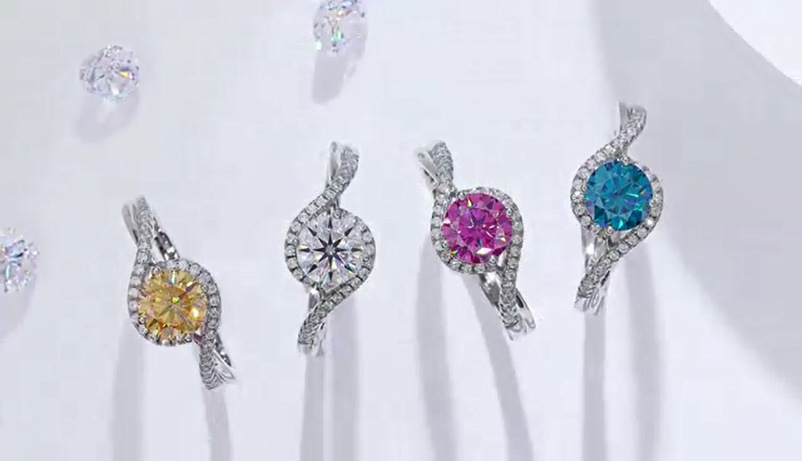
Despite its growing share, the market share of lab grown diamond remains relatively small. Currently, lab grown diamond account for 7% of the specialty diamond jewelry market, up from 3% in 2020.
Some major jewelry retailers are working to bring lab grown diamond into the mainstream, and in 2021, Pandora, the world's largest jewelry company, made a major shift by announcing it would stop using mined diamonds in its jewelry and instead use online lab grown diamonds.
Pandora said it is implementing the change as part of an effort to sell sustainable jewelry and because consumers are increasingly demanding it. The company said it has expanded the store's selection of lab diamond jewelry to respond to growing demand .
With conscious consumerism gaining momentum, it is not surprising that there is a craze for artificially grown diamonds. However, there is one important consideration for anyone buying lab-created diamonds: the resale value of a lab diamond is minimal.
So while you may not be able to tell the difference between a natural diamond and a factory-made variety, trained people can, and once a stone is identified as a factory diamond, even if you pay a lot less for it, you won't get much. But there is more to the value of a ring than just money.
People always ask what they think of the ring they have, and if it were me, I'd say, if you like it, be happy. An engagement ring is a symbol of commitment and enduring love.
A masterpiece of nature, the diamond has attracted the pursuit of mankind with its unique properties and rarity. The formation, nature and application of diamonds reflect their significant value in the fields of science, industry and culture. Although the advent of lab grown diamond has provided mankind with more choices, natural diamonds will continue to occupy an important place in the evolution of human civilization as the treasures of the earth.